
Aruba Weather in January: Rain, Temperatures
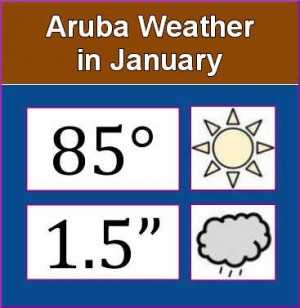 |
| Average rainfall and high temperature for Aruba in January. © Scott S. Bateman |
When the days of winter loom ahead, Aruba weather in January offers an ideal way for vacationers to get away from the cold.
Aruba is known for being a warm and dry island, and January is no exception.
Aruba Temperatures
Aruba’s temperature in January has an average high of 85 degrees Fahrenheit or 30 Celsius, according to the Meteorological Department of Aruba. The average low temperature is 75 degrees Fahrenheit. The high is mostly during the daytime and the low usually occurs at night.
These high and low air temperatures usually mean that seawater is comfortable for swimming throughout the day. But during one visit to the island in the winter, we and other beach lovers found the water too chilly for swimming because of moderate temperatures, cool currents and wind chills. So sometimes warm seawater in January requires a little luck.
By comparison, temperatures in Aruba reach their peak in July and August with the high averaging around 93 degrees Fahrenheit or 34 Celsius. December is the coolest month of the year, followed by January.
Aruba nearly tops the list as the second warmest Caribbean island in January.
Average Rainfall
Aruba has about 18 inches of rain per year, according to the Meteorological Department of Aruba. It records the most rainfall during the months of October, November and December with an average of about three inches a month. By comparison, the average rainfall in January is about 1.5 inches.
Even during the months of heaviest rainfall, the rain often comes in short bursts. Aruba rarely has rain for more than a few minutes at a time.
It rains an average of 11 days during January, which is the highest level of the year along with December. By comparison, it rains an average of only two to three days per month from March through September.
In January, it is most likely to rain in the morning and least likely in the afternoon, allowing afternoon sunbathers more time on the beach.
The regular rainfall during the winter months helps to keep the temperature moderate.
Wind Levels
Aruba is one of the ABC islands (consisting of Aruba, Bonaire, and Curacao) on the southwestern tip of the Caribbean Sea.
Because of their southern location, these islands usually fall below the annual Caribbean hurricane path. Aruba usually has only the tail end of hurricanes as they pass through during hurricane season, which is June through November.
In January, the risk of a hurricane becomes non-existent. Nevertheless, because Aruba is a tropical island, a light, airy breeze is almost always present.
Wind gusts average a pleasant 14 miles per hour, just enough to keep visitors cool while lying on the beach. These trade winds also help to keep the bugs away and the humidity level low.
• Aruba weather in January - February - March - April - May - June - July - August - September - October - November - December
Should I Visit Aruba in January?
With very little rainfall, no threat of hurricanes, and a light breeze, Aruba weather in January makes the island an attractive vacation destination in the Caribbean during the month.
The temperature stays comfortable and warm in the mid 80s Fahrenheit or mid 20s Celsius. Rain, if any, falls in brief increments. January is one of the best times of year to visit Aruba.
Aruba Cruise Port Visitor Guide
 The Aruba cruise port of Oranjestad is an easy port for visitors to tour in a short period of time.
Best and Worst Times to Visit Aruba
 The best time to visit arid Aruba is January through September when the risk of rain is low.
10 Best Aruba Tourist Attractions
 The 10 best Aruba tourist attractions start with Palm Beach, Oranjestad and Arikok National Park.