
Grenada Travel Tips: Attractions, When to Go, Weather
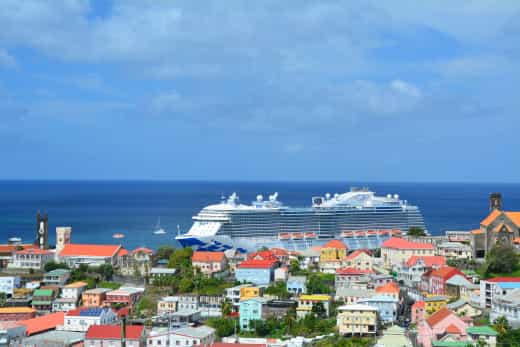 |
| A cruise ship docks at St. Georges. Credit: Depositphotos |
The eastern Caribbean island of Grenada isn’t well known as a beach vacation destination, but it isn’t overly commercialized either.
Anyone looking for an authentic Caribbean getaway may find that Grenada offers plenty of quiet authenticity.
A Grenada vacation also falls in the same league as Dominica, Jamaica and other island nations known for their mountains, lush rainforests and waterfalls. In other words, it gets quite a bit of rain during the year, especially during hurricane season.
The “Isle of Spice”, known for nutmeg productions, consists of the main island of Grenada and the smaller islands of Carriacou and Petite Martinique. The nation ranks 22nd in total tourism, 21st in overnight vacations and 18th in cruise visits compared to other Caribbean destinations, according to the Caribbean Tourism Organization.
So it is not the most popular Caribbean island by far, but it does have some unique qualities that attract cruise and resort visitors.
Grenada Attractions
 |
| Grenada is known for many waterfalls because of heavy annual rains. © Grenada Tourism Authority |
Grenada’s tourist attractions are mainly outdoors and created by nature. The main island has many hiking opportunities and quite a few waterfalls.
Annandale Falls are easily accessible from St. Georges. It has restrooms and nearby shops.
Annandale Falls is one of the most popular attractions. It often is combined with other activities by shore excursion operators. For example, one excursion includes both Annandale and rafting on Balthazar River for about $140.
Concord Valley has three waterfalls known together as the Concord Falls.
Fontainebleau has a waterfall dropping off a 65-foot cliff into a clear pool. The Royal Mt. Carmel Falls have two that drop more than 70 feet.
Anyone who prefers history and architecture can tour the capital city of St. Georges and nearby plantations.
Tours include the Grenada Sugar Factory in St. Georges, the River Antoine Rum Distillery in St. Patrick parish, Westerhall Rum Distillery in St. David and Grenville Nutmeg Processing Station in St. Andrew.
Tours near the St. John parish include Dunfermline Rum Distillery, Douglaston Spice Estate and Gouyave Nutmeg Processing Station.
Tourism / When to Go
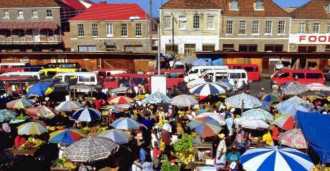 |
| Shops fill the capital city of St. Georges. Copyright Grenada Tourism Authority |
The most popular month for travelers to visit Grenada is August followed by December, according to the Caribbean Tourism Organization. The least popular is September and then a tie between June and October. September and October are especially unpopular times to visit because they have a high risk of heavy rains.
U.S. and Canadian citizens require passports for overnight visits. Cruise visitors need their ship IDs to exit and return to the ship.
Even though August is the most popular month to visit, May is better because of a low risk of rain.
Grenada Weather
Grenada is one of the warmer islands with an average high temperature of about 86 degrees Fahrenheit or 30 Celsius almost year round.
The dry season is February through May with an average rainfall of one inch or less. The rainy season begins in June. Total rainfall keeps climbing until it reaches more than 10 inches historically in November.
Grenada is on the edge of the hurricane belt, with the hurricane season going from June through November. The climate is tropical and tempered by northeast trade winds.
Getting Around
Rental car drivers must be at least 25 years old, have a valid driver’s license and get a $60 EC driving permit from the police station at The Carenage in St Georges. Some rental agencies provide the permit.
The island has a public bus system that runs between 6 a.m. and 9 p.m. Monday through Saturday, according to the Grenada Tourism Authority. Each bus has a zone sticker in the front and a conductor to help passengers. Fares cost between $2.50 and $6.50 EC.
Land and water taxis also are available for hire. Hotel and airport taxis have fixed rates, while rates vary for other points of interest around the island. Always ask for the rate before getting into the taxi.
Currency / Tipping
The official currency is the Eastern Caribbean Dollar. U.S. currency and major credit cards are accepted, but it is advised to exchange currency at a bank when possible.
A 10 percent service charge is commonly added to hotel and restaurant bills. Hotels and restaurants also are required to charge an 8 percent government tax.
Culture / Geography
The official language is English, but French patois (a regional or provincial form) is also spoken because the country was a former colony of France and then England.
Tourism is the dominant economic sector. The island is about 214 square miles in size and has a mountainous landscape.
Sources / More information
- Grenada Tourism
- Caribbean Tourism Organization
- National Oceanic and Atmospheric Administration
- U.S. State Department Travel
- CIA Factbook
