
Havana Cuba Cruise Port Guide
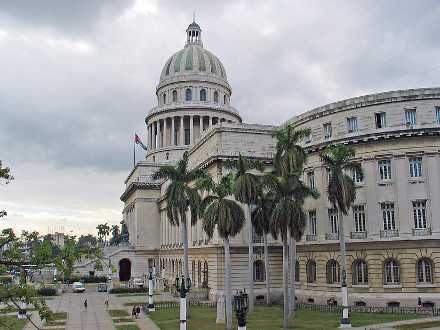 |
| Capitolio is a popular attraction in Havana. Credit: Wikimedia Creative Commons license |
Havana Cuba has skyrocketed into popularity among cruise destinations in the Caribbean thanks to better diplomatic relations between Cuba and the United States.
A handful of cruises began visiting the Havana port after the death in late 2016 of Cuban dictator Fidel Castro. Cruise sites are now filled with options for visiting historic Havana.
And history indeed is the highlight of a Havana cruise. Cuba is known for the revolution that brought Castro to power in 1959. But the island and especially Havana are packed with colonial history including Old San Juan, which dates back to the 1500s.
Quick Travel Tips
- Old Havana is a major historical attraction.
- Beaches are hard to reach.
- Late spring is the best time to go.
Attractions and Shore Excursions
Havana Cruise Port Map
Old Havana evokes comparisons to Old San Juan. The city dates back to 1519 as a settlement for Spanish conquerors. They used the city as a center of trade, a strategic military position and storage for treasures brought back from the New World before transport back to Spain. A seawall begun in the 17th century took 100 years to complete, according to the Cuba Tourist Board.
One of the major attractions within Old Havana is Cathedral Square, which is made up of Plaza Vieja (Old Square) and Francis of Assisi square. Plaza Vieja is the location of the San Juan de Jaruco mansion. Francis of Assisi square has a church and convent of the same name. The Museum of Sacred Art is located in the convent’s cloisters.
The Castillo de la Real Fuerza, built in 1577, displays the most important pottery collection in Cuba. La Giraldilla, an artistic wind vane and symbol of the city, sits atop the building. Other attractions in the square are the Captain-General’s Palace (Museum of the City) and El Segundo Cabo.
Museo Nacional de Bellas Artes de La Habana in Old Havana exhibits Cuban art collections from the colonial era to current times.
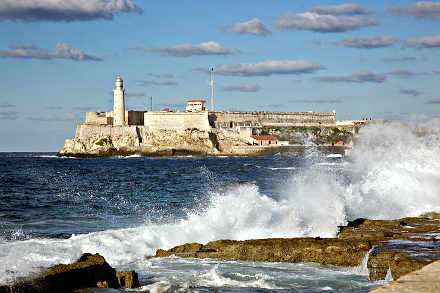 |
| El Morro castle. Credit: Pixabay license |
Military buffs can explore the Morro-Cabaña park, which showcases two major ruins in one historical fortress.The Castle of the Three Kings of El Morro was erected in 1630. The fortress of San Carlos de la Cabaña was built in 1774. Both structures contain military museums.
Visitors to the park also will be able to see Prado Promenade, the Great Theatre of Havana and the Capitol building. The Capitol building has the Statue of the Republic, which has a diamond planted at its feet to mark kilometer zero of Central Road.
Malecón is a broad ocean-side road that extends for five miles along the city’s beach. It starts at the mouth of Havana Harbor by Old Havana and ends in the Vedado neighborhood. The boardwalk is especially popular with walkers and fishermen.
Malecón offers access to other nearby attractions including the Revolution Square, University of Havana, the José Martí Monument and the Colon Cemetery, which is one of the world’s largest necropolises.
Napoleon Museum, located by the University of Havana, is a major collection of art and other items from the 18th and 19th centuries. It contains almost 8,000 items, most of them originating between the French Revolution and the Second Empire.
Revolution Square or Plaza de la Revolución is one of the largest city squares in the world and the location of many major political rallies and speeches by former president Fidel Castro. Overlooking the square is José Martí Memorial with a 358-foot tower and a 59-foot statue. Many government ministries surround the square.
The fishing village of Cojimar is about three miles east of Havana. It is famous with tourists because Ernest Hemingway, a winner of the Nobel prize for literature, kept his boat there, developed material for many of his stories and found the inspiration for his classic novel “The Old Man and the Sea.”
Beaches Near the Cruise Port
Havana is not known for major beaches that are easy to reach for cruise visitors. Cruise lines and tour operators offer few excursions if any to nearby beaches.
Playa del Este, 10 miles east of Havana, is the Riviera of Cuba with more than nine miles of beaches and hotels located between Bacuranao and Guanabo. It is part of a string of beaches on a strip known as Santa María del Mar. If an excursion isn’t available, the next option for getting there is a taxi.
Weather / Best Time to Go
Havana’s monthly weather has is not quite as warm as many other destinations in the Caribbean. Although predictably warm for most of the year, the city has spikes of rainfall in June and October.
Late spring is the best time to visit for a combination of warm temperatures and low risk of rain. April historically is the best month of the year for weather.
The average high temperature in Havana ranges from 78 degrees Fahrenheit and 26 degrees Celsius in January to 89 degrees F and 32 degrees C during the peak of summer in August, according to the Cuba Institute of Meteorology.
Rainfall in Havana reaches a high point of more than seven inches in June. It declines for several months until it hits another high point of more than seven inches in October.
The city clearly has a dry season that runs from December through April every year when total rainfall each month averages less than three inches. May, November and August hover right around three and a half to four inches.
Rain days, or the average number of days that it rains each month, is lower in Havana than most other Caribbean locations.
June, September and October average 10 to 11 days each, while March and April average only three days each.
The month with the highest average temperature and lowest rainfall is August, when the high reaches 89 degrees Fahrenheit and rainfall totals 3.9 inches.
